AI Tools
Shared ChatGPT and Grok accounts: the real trade-offs behind the low price
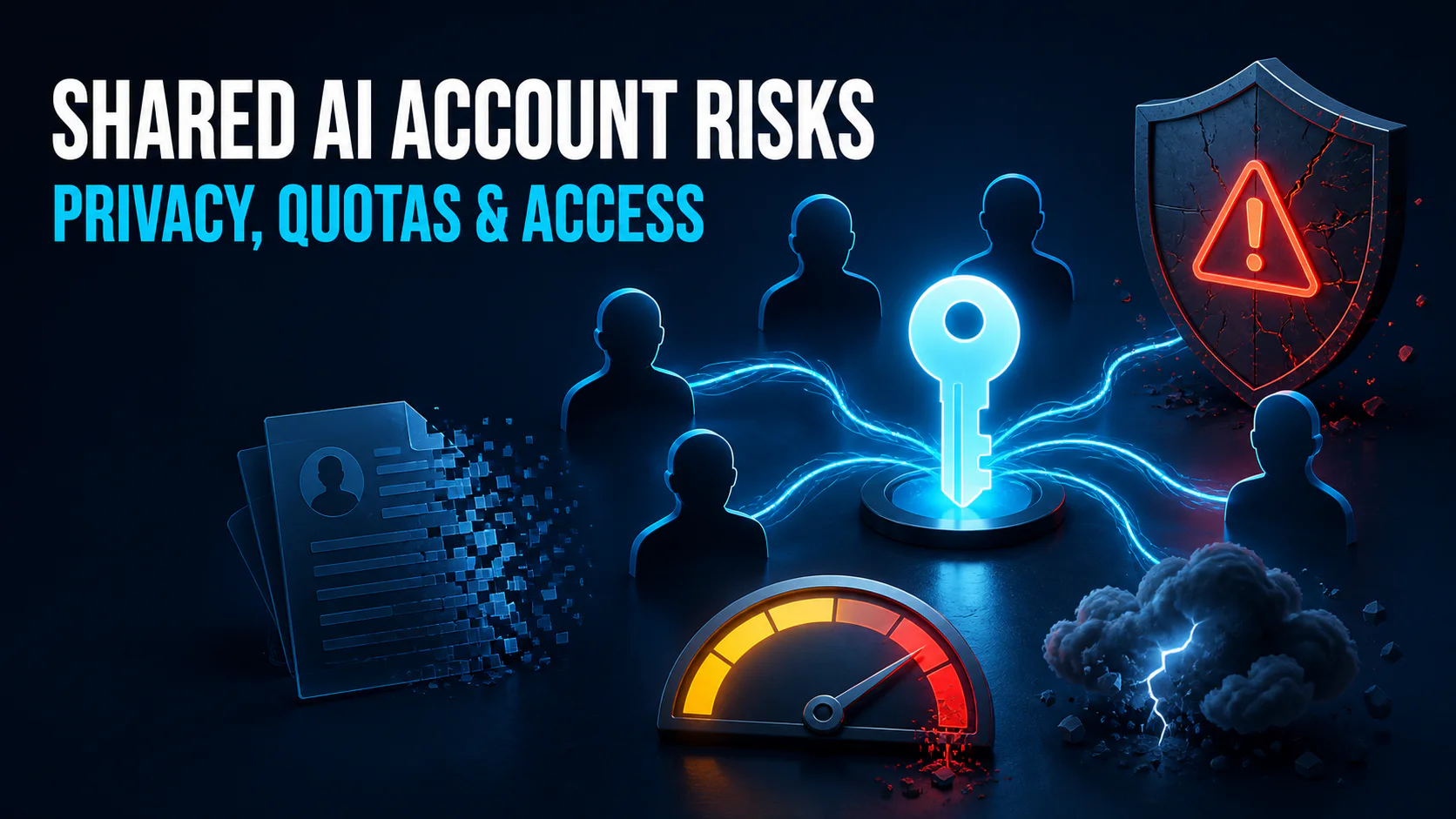
Shared accounts can work for light trial usage, but they are usually a poor fit for serious workflows that need stability, privacy, and long-term context retention.
Contents
Shared ChatGPT and Grok accounts look attractive for one reason: price.
For first-time buyers, though, the better question is not “how cheap is it?” but “what problems am I accepting?”
Shared access is not automatically bad. The issue is expectation mismatch: people buy a shared setup but expect a dedicated-account experience.
Common shared-account problems
1) Privacy exposure
In shared environments, chat history, uploads, and usage traces may be visible or recoverable across users.
That is a poor fit for work documents, personal files, client data, and any sensitive material.
2) Limited chat availability
Many shared accounts are not practically “unlimited.”
During peak hours, you may hit message limits or waiting queues exactly when you need the tool.
3) Tight Codex / coding capacity
If your workflow involves coding, long debugging sessions, or sustained code generation, shared capacity can run out fast.
When limits hit, development flow breaks immediately.
4) Image / video generation gets exhausted first
High-cost features like image and video generation are usually the first to be contested in shared pools.
The most common outcomes are long queues or no capacity left for the day.
5) Risk-control triggers
This is often overlooked. Frequent account switching across devices, IPs, and regions can trigger platform security controls:
- extra verification challenges
- temporary restrictions
- suspicious-login alerts
- in severe cases, suspension or lockout
These events are often behavior-pattern driven, not necessarily “malicious intent.”
6) Frequent logouts and password rotation
In many shared setups, users take turns. Typical complaints:
- access works today but fails tomorrow
- forced logouts happen repeatedly
- passwords change often
- support contact is needed again and again
7) History loss after account replacement
If a shared account is suspended and replaced, prior chats, saved context, and accumulated workflow memory may be lost.
For long-cycle work, this is a direct productivity cost.
8) Huge after-sales quality gap
Provider quality varies widely:
- some disappear after payment
- some respond, but without predictable recovery time
Support quality can matter as much as price in shared-account scenarios.
Who shared accounts are actually suitable for
Shared accounts are usually acceptable for:
✅ occasional trial use
✅ light usage intensity
✅ short-term experimentation
✅ workflows that can tolerate instability
Who should avoid shared accounts
A dedicated account or official subscription is usually safer if you are:
❌ a high-frequency user
❌ dependent on AI for work or study
❌ building coding/project workflows
❌ relying on long-term chat/context accumulation
Practical note on service providers
In practice, support responsiveness does differ by platform.
For example, services like FamilyPro can be easier to reach when something breaks. But shared-account structural issues (capacity contention, risk-control volatility, unstable continuity) are not unique to one provider.
One-line takeaway
You can buy shared access, but do not evaluate it with dedicated-account expectations.
The lower price nearly always comes with a stability and control trade-off.
References
- FamilyPro — ChatGPT: https://familypro.io/en/products/chatgpt?invite=YK868462
- FamilyPro — ChatGPT Top-up: https://familypro.io/en/products/chatgpt-top-up?invite=YK868462
- FamilyPro — Grok: https://familypro.io/en/products/grok?invite=YK868462