AI工具
Choose the Right NanoBanana Model First, Then Use This Prompt Framework for More Reliable Image Results
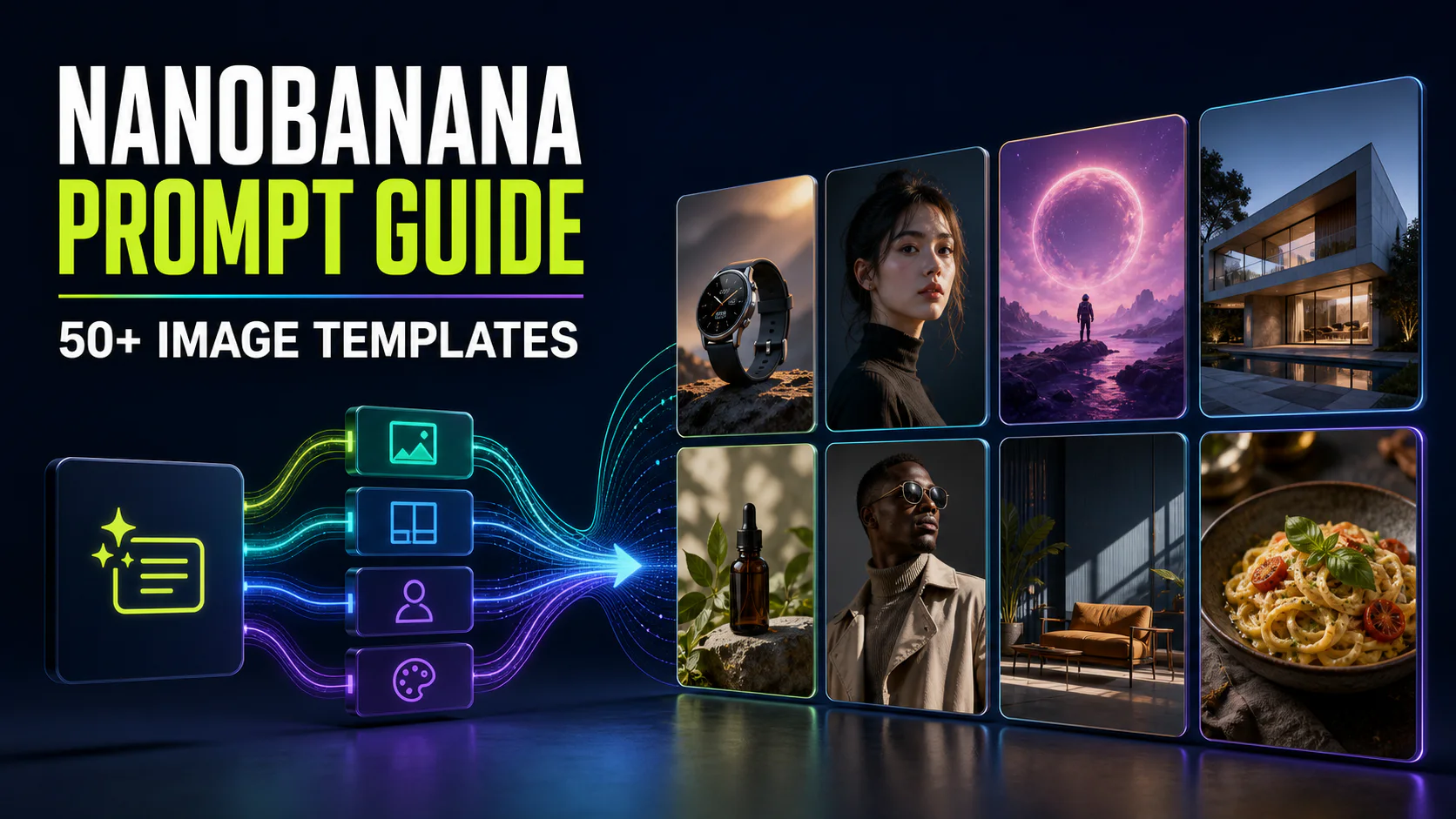
From model selection to prompt structure to 50+ categorized examples, this article shows how to get NanoBanana image generation closer to your target output.
Contents
Many creators run into the same issue with NanoBanana image generation:
the prompt looks long and detailed, but the result still does not match the target.
In most cases, this is not a “writing talent” problem. It usually means two things were missed:
- The wrong model was chosen for the task stage
- The prompt is descriptive, but not structured as an executable instruction
This article follows a practical workflow:
- First: positioning and differences across
nanobanana / nanobananapro / nanobanana2 - Then: a reusable prompt structure
- Finally: 50+ categorized templates you can directly adapt
Data date: 2026-04-20
Note: Available capabilities and speed can vary by platform entry, account level, and region setup. This guide focuses on stable workflow methods, not guaranteed fixed limits.
1) Pick the model first: how the NanoBanana series is split
Quick conclusion:
nanobanana is for fast general drafts, nanobananapro is quality-first for commercial delivery, and nanobanana2 is better for balanced performance plus complex prompt understanding.
1.1 Practical role of each model
| Model | Typical role | Best-fit tasks | Common downside |
|---|---|---|---|
| nanobanana | Entry-level and high-frequency sketching | Early ideation, quick social visuals, direction exploration | Complex composition and detail consistency may fluctuate |
| nanobananapro | Quality and texture first | Ecommerce key visuals, ad KV, brand creatives, polished outputs | Usually higher cost and a steeper iteration threshold |
| nanobanana2 | Upgraded all-around understanding | Multi-constraint prompts, complex scene narrative, finer control | If prompts are unclear, complexity can still backfire |
1.2 How to choose in practice
- Need speed for direction testing: start with
nanobananafor 3-5 direction drafts - Direction is confirmed and you need delivery quality: switch to
nanobananapro - Need multiple constraints satisfied at once (character + scene + style + action + composition): prioritize
nanobanana2
1.3 Common beginner mistakes
- Starting with the highest-end model during exploration phase
- Writing highly complex constraints into a base model and expecting one-shot perfection
- Skipping staged generation, so each round becomes a full re-roll
2) Prompt writing for image generation: structure first, wording second
For consistent outputs, use this fixed structure:
Subject + Scene + Action/State + Composition/Camera + Style + Lighting/Color + Material Details + Output Specs + Negative Constraints
Starter template:
A [subject details] in [scene], [action/state]; composition [close-up/half-body/full-body/wide], [view angle]; style [realistic/illustration/3D/cyberpunk], lighting [morning/soft/neon/backlight], color [warm/cool direction], emphasize [material details]; output [aspect ratio/resolution]; avoid [extra fingers, facial distortion, messy background, text gibberish, style drift].
3) The 8 dimensions you must control
3.1 Make the subject identifiable
Avoid “a woman.” Use “25-year-old Asian woman, short hair, beige trench coat, holding a transparent umbrella.”
3.2 Define time and environment in the scene
“On the street” is too vague.
”Tokyo street corner after rain at dusk, neon reflections on wet ground” is much more stable.
3.3 Make actions visible, not abstract
“Show hope” is hard to execute.
”She looks up at a distant sign, with a subtle smile” is executable.
3.4 Composition is the quality dividing line
At minimum, define shot size + angle + subject placement.
Example: “half-body close shot, eye-level, subject placed in left third.”
3.5 Use two-layer style constraints
“Cinematic” alone is too broad.
Use style + texture pairs, e.g. cinematic + film grain, minimal illustration + low saturation.
3.6 Material detail decides premium feel
Skin texture, metal reflection, fabric weave, and glass refraction often matter more than adjective stacking.
3.7 Negative prompts stabilize generation
Keep a default block:
avoid low clarity, avoid body distortion, avoid extra fingers, avoid messy background, avoid text gibberish, avoid watermark, avoid style jumps
3.8 Change one variable per round
Round 1: composition. Round 2: lighting. Round 3: style.
This is the only way to know what improved the output.
4) A four-step path from “usable” to “deliverable”
- Direction draft: subject, scene, composition only
- Style draft: add style, lighting, and palette
- Texture draft: add material and detail constraints
- Delivery draft: finalize negatives and consistency specs (ratio, resolution, background cleanliness)
5) 50+ categorized NanoBanana image prompt templates
Below are 56 templates grouped by real production scenarios. Replace bracketed terms with your own content.
A. Ecommerce Main Visuals and Product Marketing (10)
- [Product name] on a light-gray seamless background, 45-degree display angle, soft top light, photoreal style, emphasize material texture, 1:1, avoid background clutter.
- [Product name] floating at center on a pure-color background, subtle shadow below, minimal commercial photography style, strong contour separation, 4:5, avoid overexposed reflections.
- [Product name] arranged neatly with [accessories], top-down composition, clean ecommerce lighting, high detail clarity, 1:1, avoid perspective distortion.
- [Skincare product] on a glass surface with water droplets, cool white fill light, premium ad style, emphasize bottle refraction, 4:5, avoid blurry labels.
- [Headphone product] on dark background, rim lighting, tech poster style, emphasize metal texture, 16:9, avoid visible noise.
- [Coffee machine] on a modern kitchen counter, medium eye-level framing, natural morning light, lifestyle ad style, 3:4, avoid subject competition from people.
- [Shoe model] floating with dynamic smoke background, sports brand visual style, high contrast, 4:5, avoid shoe shape distortion.
- [Smartwatch] close-up, screen lit, dark high-contrast background, futuristic tech style, emphasize strap texture, 1:1, avoid text errors.
- [Jewelry ring] on black velvet, macro close-up, spotlight on gemstone, luxury ad style, 1:1, avoid dirty reflections.
- [Food package] on a wooden table, warm natural light, realistic unboxing look, food-photography style, 4:5, avoid packaging deformation.
B. Portraits and Social Profile Images (10)
- A [age] [gender] subject, half-body close portrait, shallow depth of field background, soft portrait style, natural skin tone, 4:5, avoid plastic skin.
- [Professional role] standing in front of city nightscape with neon reflections, cinematic portrait style, restrained expression, 3:4, avoid facial distortion.
- [Character] by a cafe window, side-lit face, Japanese film-photo style, low saturation, 4:5, avoid abnormal background faces.
- [Character] backlit outdoor portrait with clear hair rim light, realistic photography style, fine skin texture, 4:5, avoid overexposure.
- [Character] ID-photo style on plain background, front-facing eye-level, even lighting, professional profile output, 3:4, avoid feature misalignment.
- [Character] in black turtleneck, dark studio setup, Rembrandt lighting, magazine-cover style, 4:5, avoid heavy grain noise.
- [Character] sporty avatar with dynamic pose, bright outdoor light, energetic social style, 1:1, avoid body proportion errors.
- [Character] classical oil-painting portrait, dark background, soft facial light, gallery-art texture, 3:4, avoid muddy brushwork.
- [Character] cyberpunk avatar, purple-blue neon environment, futuristic wardrobe detail, 1:1, avoid style inconsistency.
- [Character] business profile photo, light-gray background, natural smile, professional studio style, 1:1, avoid teeth deformation.
C. Posters, Covers, and Brand KV (10)
- Creative poster for [theme], centered subject with reserved title space, minimalist modern style, strong contrast colors, 4:5, avoid visual crowding.
- Tech launch poster for [event], dark gradient background with glowing lines, futuristic visual language, 9:16, avoid cluttered text area.
- [Music single] cover style, retro film grain, close character shot, low saturation, 1:1, avoid facial collapse.
- [Brand name] new-product poster, product occupies 60% of frame, premium commercial lighting, 4:5, avoid weak visual hierarchy.
- [Film concept] teaser poster, back-view character plus grand environment, epic light contrast, 2:3, avoid perspective collapse.
- [Course topic] education poster with books and digital elements, clear title-safe area, 4:5, avoid noisy composition.
- [Fitness theme] dynamic poster, character frozen mid-jump, directional hard light, sports-brand look, 4:5, avoid stretched limbs.
- [Festival theme] warm illustration poster, hand-drawn texture and ambient string lights, 3:4, avoid muddy palette.
- [Startup theme] business poster, skyline overlaid with character silhouette, restrained professional tone, 16:9, avoid conflicting elements.
- [Beauty campaign] glossy poster with glass and liquid elements, luxurious lighting effects, 4:5, avoid blurry product edges.
D. Illustration, IP, and Concept Design (10)
- [Character setup] full-body turnaround-style front view, plain background, 2:3, avoid costume detail loss.
- [Fantasy character] holding [weapon], dynamic pose, thick-painted anime style, blurred background, 2:3, avoid finger count errors.
- [Sci-fi character] exoskeleton concept sheet, rich industrial details, concept-art style, 16:9, avoid structural clipping.
- [Chibi character] big-head small-body proportion, bright candy colors, social sticker style, 1:1, avoid dirty linework.
- [Creature concept] half-body close-up, clear skin texture and glowing organs, dark fantasy style, 3:4, avoid strange proportions.
- [Ancient-style character] in a corridor courtyard, flowing robe hem, Eastern illustration style, soft lighting, 3:4, avoid overly modern makeup cues.
- [Pixel character] 8-bit game sprite style, plain background, crisp pixel edges, 1:1, avoid anti-aliased blur.
- [Fairy-tale character] picture-book style, pastel palette, warm atmosphere, interaction with small animals, 4:5, avoid overly harsh shadows.
- [Steampunk character] brass mechanical prosthetic details, smoky background, retro industrial style, 3:4, avoid plastic-looking metal.
- [Villain character] low-angle heroic framing, strong backlight, oppressive composition, cinematic concept style, 2:3, avoid feature displacement.
E. Interior, Architecture, and Spatial Design (8)
- Modern living-room design image, beige plus wood palette, wide interior photography style, bright translucent lighting, 16:9, avoid furniture scale errors.
- Nordic bedroom, morning light through window, clear cotton-linen material details, home magazine style, 4:5, avoid spatial warping.
- Cafe interior with industrial pendant lights and bar counter, medium perspective composition, commercial-space showcase style, 16:9, avoid chaotic perspective lines.
- Minimal office with open desks and green accents, bright natural light, enterprise visual style, 16:9, avoid blurry crowd details.
- Modern villa facade at blue-hour dusk, architectural photography style, 16:9, avoid incorrect glass reflections.
- Japanese garden vignette with stone lantern and maple tree, light rain mood, tranquil realistic style, 4:5, avoid fake water texture.
- Exhibition hall render with central installation art, spotlight setup, curated visual style, 16:9, avoid floating structures.
- Kitchen renovation before/after split-screen, consistent camera angle, practical showcase style, 16:9, avoid major lighting mismatch between sides.
F. Food, Drinks, and Lifestyle (8)
- A cup of [drink name] on wooden table, clear foam details on top, warm natural light, food photography style, 4:5, avoid jagged liquid edges.
- [Main dish] top-down plating shot, clear ingredient layering, restaurant-grade lighting, 1:1, avoid gray color cast.
- [Dessert] close-up, sugar and jam textures emphasized, bright background, social seed-content style, 4:5, avoid oversaturation.
- Breakfast setup with bread, eggs, and coffee, morning window light, lifestyle photography style, 4:5, avoid prop proportion mismatch.
- Cocktail scene, clear glass refraction and ice details, dark bar lighting mood, 3:4, avoid clipped white highlights.
- Camping picnic mood image with grass, fabric, and food props, golden-hour lighting, healing style, 16:9, avoid abnormal background people.
- Chef hand-process close-up, clear dough texture, documentary-like style, 4:5, avoid hand distortion.
- Fine-dining two-person dinner scene, candlelight mood, shallow depth of field, cinematic food-photography style, 16:9, avoid heavy noise.
6) Three reusable master prompt templates
Template 1: Realistic commercial visual
[Product/subject] in [scene], [action or state]; composition [shot size + angle + placement]; style realistic commercial photography, lighting [type], color [direction], emphasize [material details]; output [aspect ratio]; avoid [negative list].
Template 2: Portrait and social image
A [character description] in [environment], [action/expression], camera [close/medium], [eye-level/low-angle]; style [Japanese film photo/magazine portrait/cinematic], lighting [soft/backlight/neon], natural skin texture; output [aspect ratio]; avoid [facial distortion/extra fingers/messy background].
Template 3: Concept illustration
[Character/theme] concept image, scene [world-setting description], subject performing [key action]; composition [full-body/half-body/wide], style [anime/thick paint/pixel/fantasy], palette [color strategy], emphasize [costume/prop/material details]; output [aspect ratio]; avoid [structural mismatch/style drift/detail smearing].
7) Conclusion
With the NanoBanana series, output quality is not mainly about using fancy wording. It depends on:
- Whether model choice matches your current stage (exploration / polish / complex control)
- Whether the prompt is organized as an executable structure
- Whether each iteration changes one variable at a time
If you run the 56 templates above with this workflow, you will reduce “lucky one-off hits” and turn image generation into a repeatable production process.
References
- FamilyPro - Nano Banana AI Editor: https://familypro.io/en/nano-banana-ai-editor?invite=YK868462
- FamilyPro - Nano Banana Pro Editor: https://familypro.io/en/nano-banana-pro-editor?invite=YK868462
- FamilyPro - Nano Banana 2: https://familypro.io/en/nano-banana-2?invite=YK868462
- Google AI for Developers - Gemini API Docs: https://ai.google.dev/gemini-api/docs
- Google DeepMind - Gemini: https://deepmind.google/technologies/gemini/